Every agency fee, every production and every quote that passed through AURA, on one cost database: read by category, market, supplier and version, the same way every year. One brand in one market, or a global portfolio: the figures are yours, and so is the reference.
What changes
Fees, bids and production costs usually live in folders, one project at a time, and the next negotiation starts from the last offer on the table. Insights keeps every figure of every stage classified as it is saved, so a fee reads against the fees of other pitches, a shooting day against other shooting days, and every value declared carries its baseline and its grade. Marketing sees where the money goes; procurement negotiates from facts; finance validates line by line; the board reads one year against the last.
Every figure becomes the reference for the next one.
Agency fees
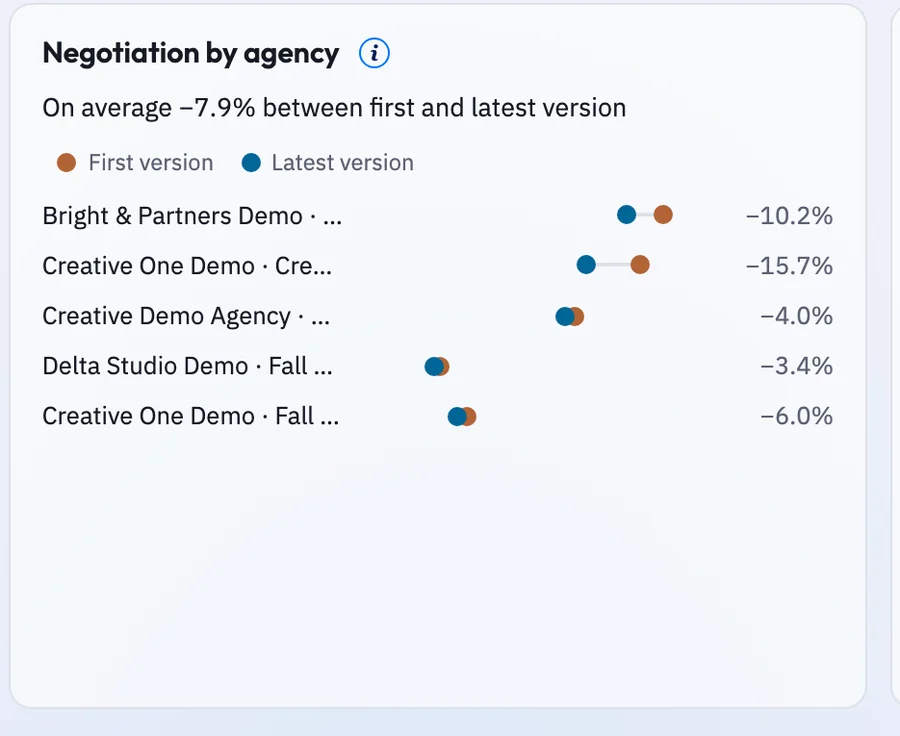
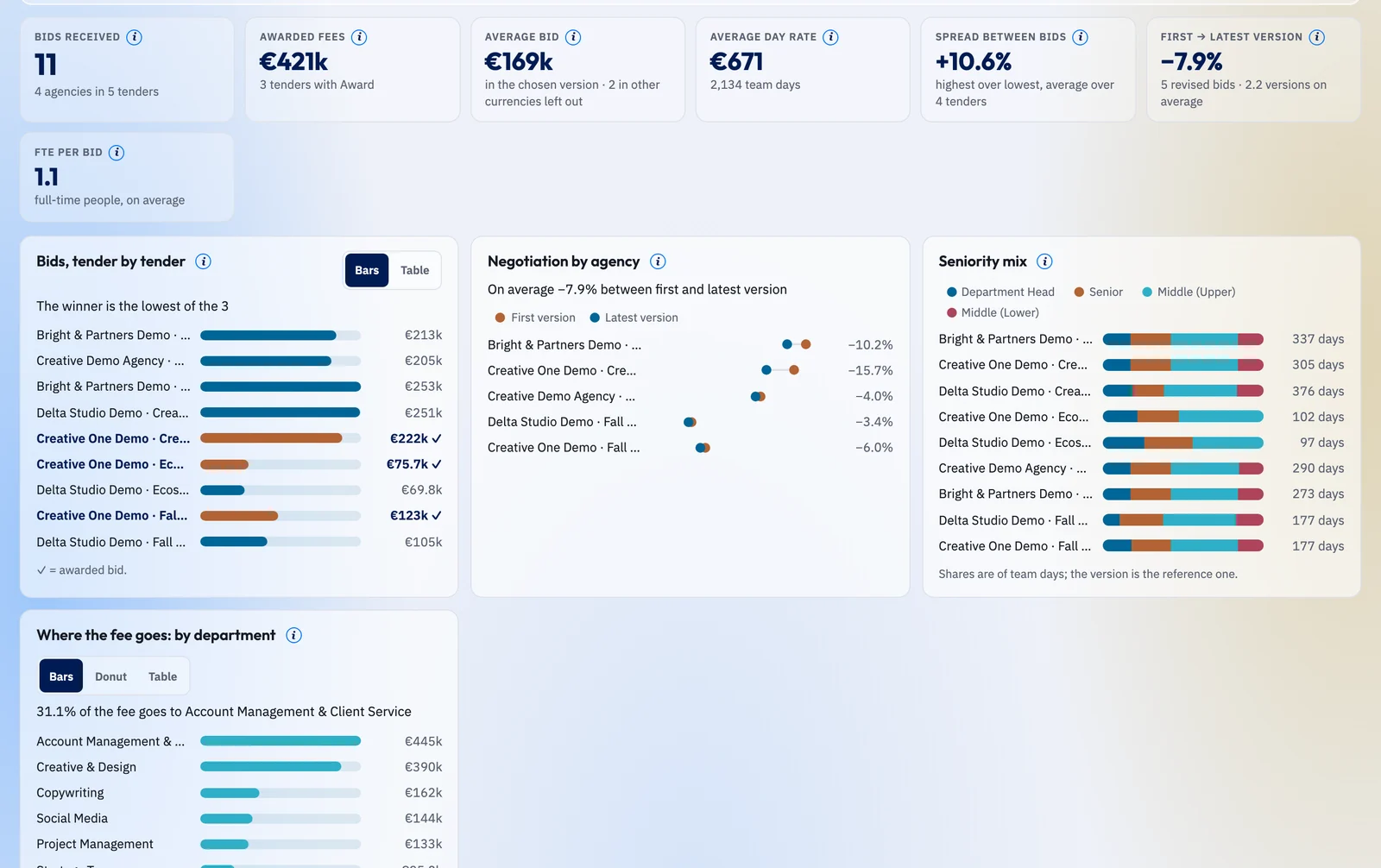
AURA keeps every agency bid of every pitch, renewal and scope on one record: the fees awarded, the average day rate, the spread between bids, the seniority mix and how far each agency moved from its first to its latest version. One pitch reads against all the others, so the next negotiation starts from the market of your own engagements, not from the last offer on the table.
Cost lines
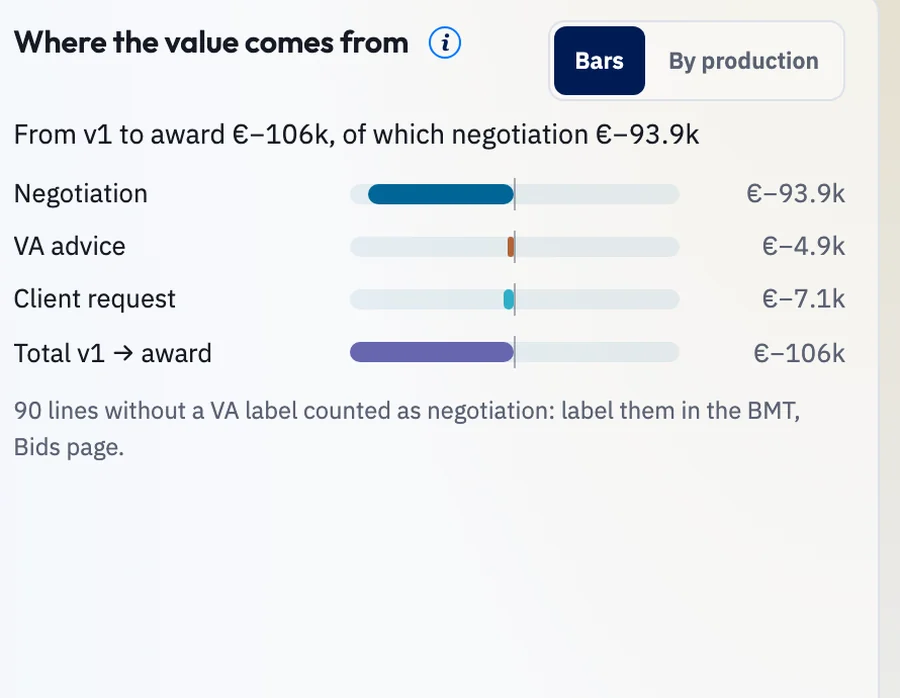
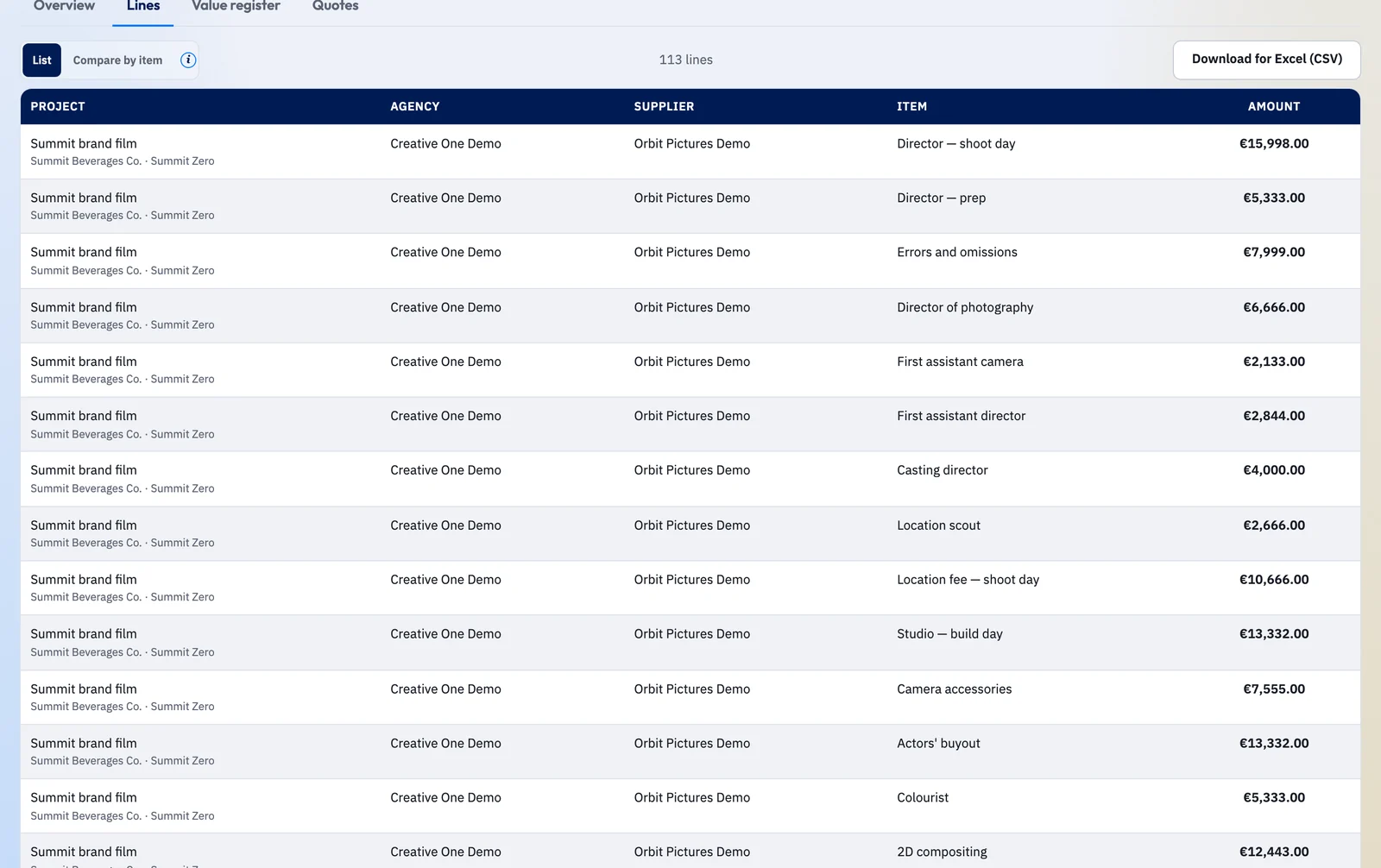
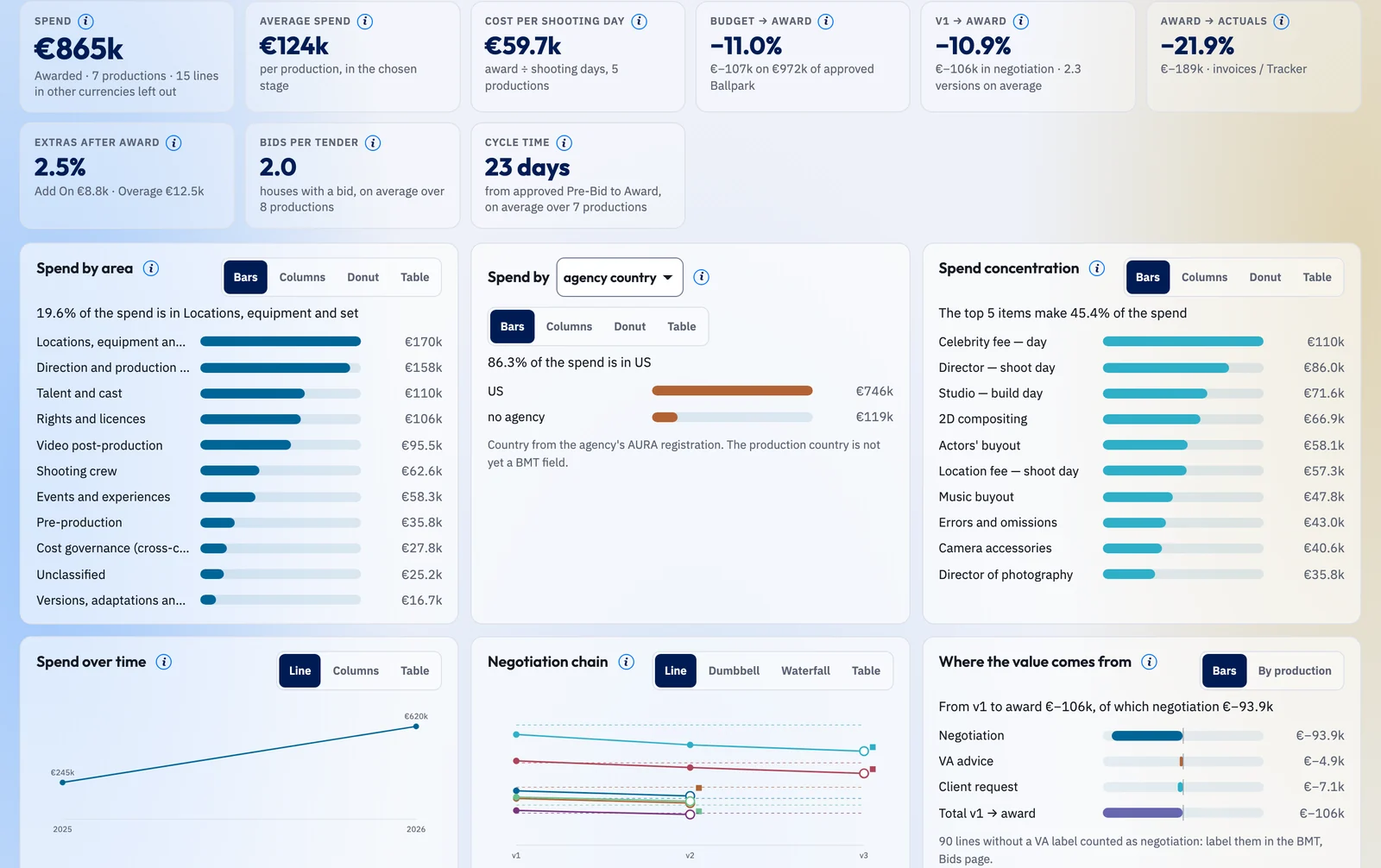
Every cost line of every production (director, crew, location, post, talent) is classified as it is saved. AURA reads the same line across productions, houses and markets, so a shooting day, a location fee or an edit is compared like for like, and the value of each negotiation shows where it came from: the negotiation itself, VA advice or a client request.
Productions
Every production and event lands in the same cost database: spend by area, cost per shooting day, budget to award, first version to award, award to actuals and extras after the award. A production reads against the comparable ones of your own record, and the negotiation chain shows where the value came from.
Value register
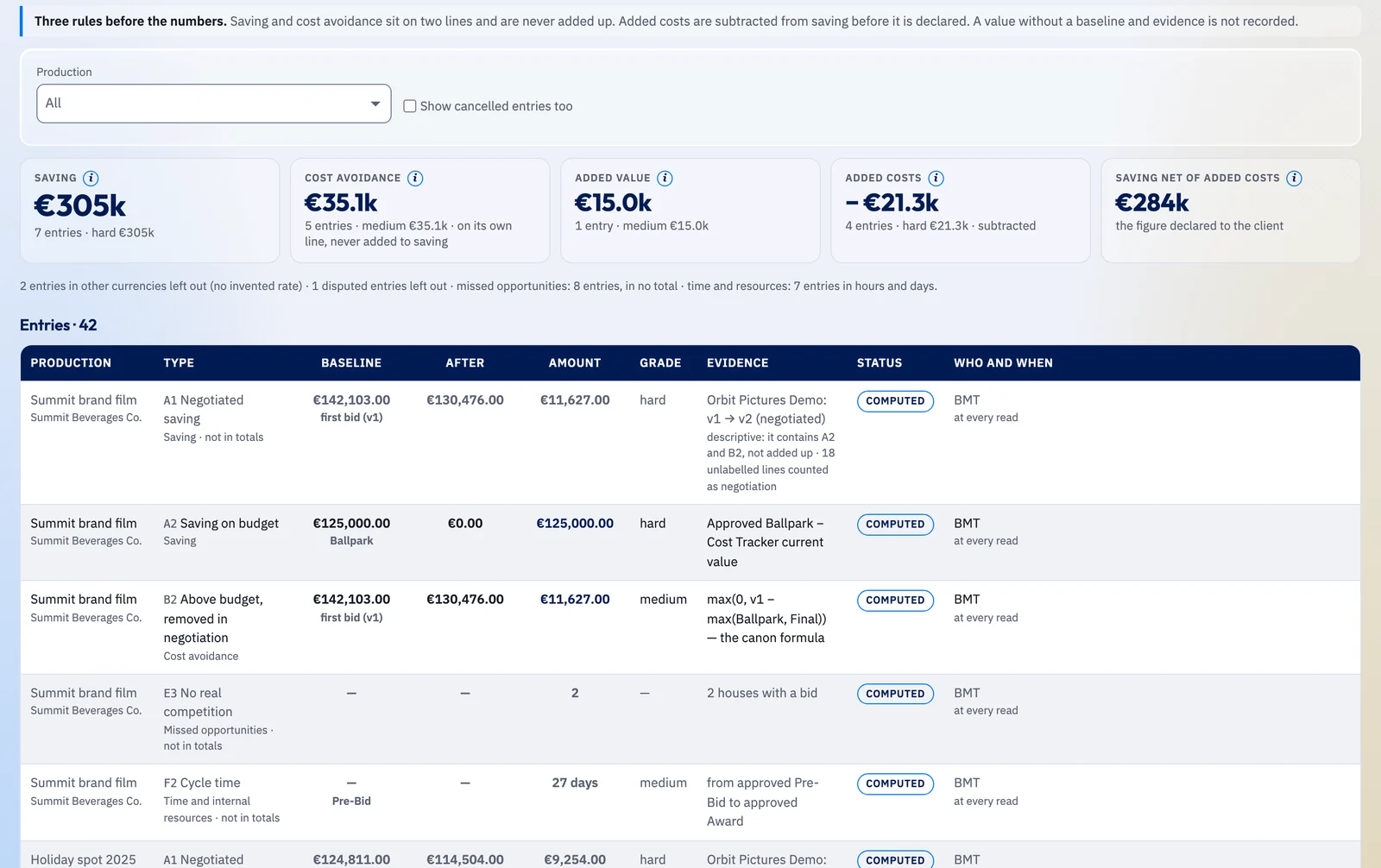
Every value recorded on a production sits in one register: cost saving, cost avoidance, added value and added costs on separate lines, never added up. Each entry carries its baseline, the amount after, the evidence that proves it and its grade (hard, medium or soft), so the figure declared to the client is the one finance can trace.
Behind every function
Your own figures read against what VA has governed since 1994: fees, pitches and productions across every stage, worldwide, for single-market accounts as for global portfolios. The larger the record, the sharper the reference, and VA’s fee is never a share of the value recorded.
of marketing spend reviewed
projects reviewed
suppliers assessed and classified
pitches managed every year
Who does what
Where it sits
Keep what was agreed and what is delivered on the same line.
Every cost of every stage, read the same way.
See how the model works today, before changing it.
Questions
From what was recorded in AURA: agency offers, production bids, cost trackers, approved quotes and the value register. Nothing is typed twice.
Yes. Every view filters by cluster, client, brand, market, supplier, year and version, and downloads to Excel.
Never. They stay on two lines in every view, each with its grade.
Yes. A single production reads against the others of your record; with more brands and markets, the reference grows with them.
Your team and VA. Agencies and production houses see only their own engagements.
Get a demo
A walk through Insights in AURA with the VA team, on your own case: one brand in one market, or a global portfolio.