See how your marketing model works today, write down what every agency is actually asked to do, and know what the work should cost before anyone quotes. One brand in one market, or a global portfolio: the record is the same, and it is yours.
What changes
Operating models get redesigned on anecdotes, scopes get rewritten from scratch every year, and rate cards arrive in formats nobody can compare. AURA puts the three facts on one record before the first decision, whether the decision is one agency contract or a roster across regions. The CMO sees where quality and speed are lost; procurement sees a documented baseline for every fee; finance sees figures it can validate; the board sees the model as it is, not as it is described.
Every change starts from a picture everyone has seen.
Assessment
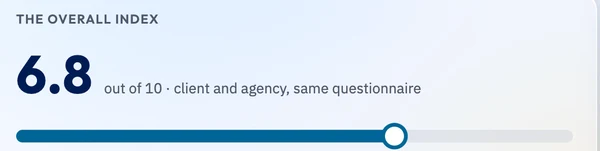
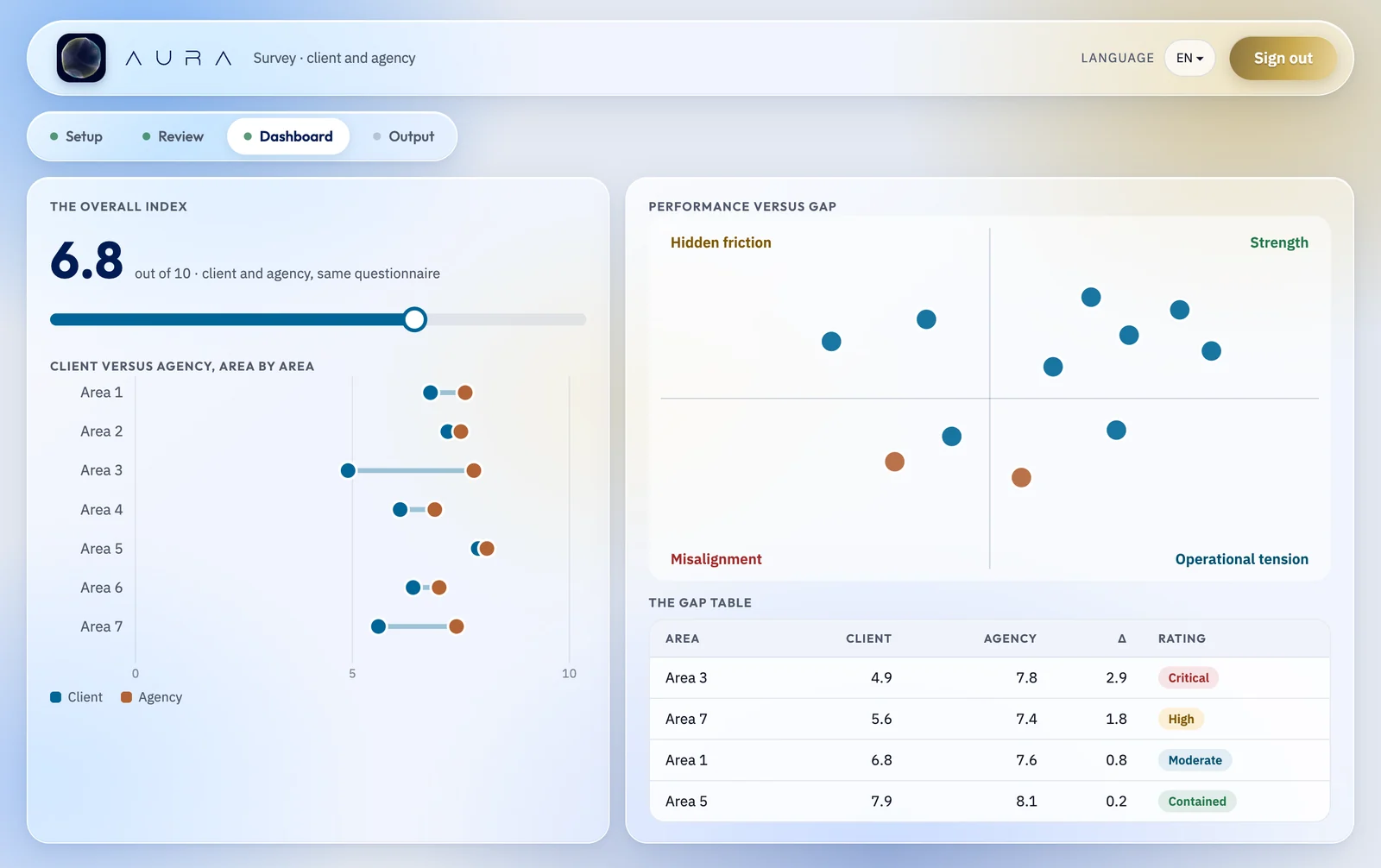
AURA assesses the operating model stream by stream (governance, planning, briefing, production, cost control, reporting) with one questionnaire answered by your team and by the agency. The two scores land on the same page, area by area, and each gap carries a rating. The same questionnaire reads a brand team of five and a marketing function spread across regions: what changes is the number of answers, not the picture.
Scope
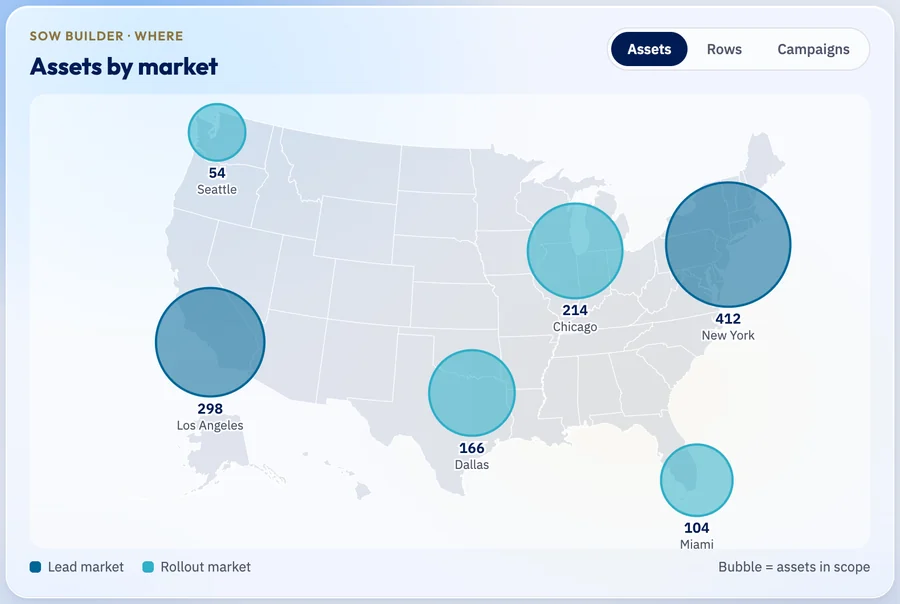
AURA holds one scope of work per project: written once, versioned, and shared with every agency on the same terms. Assets, channels, markets and technical specifications sit in one taxonomy, so last year’s scope becomes this year’s starting point and a reuse of existing assets is visible before a new production is quoted. The scope you approve is the perimeter every later figure is measured against: without it, no fee and no cost can be compared like for like.
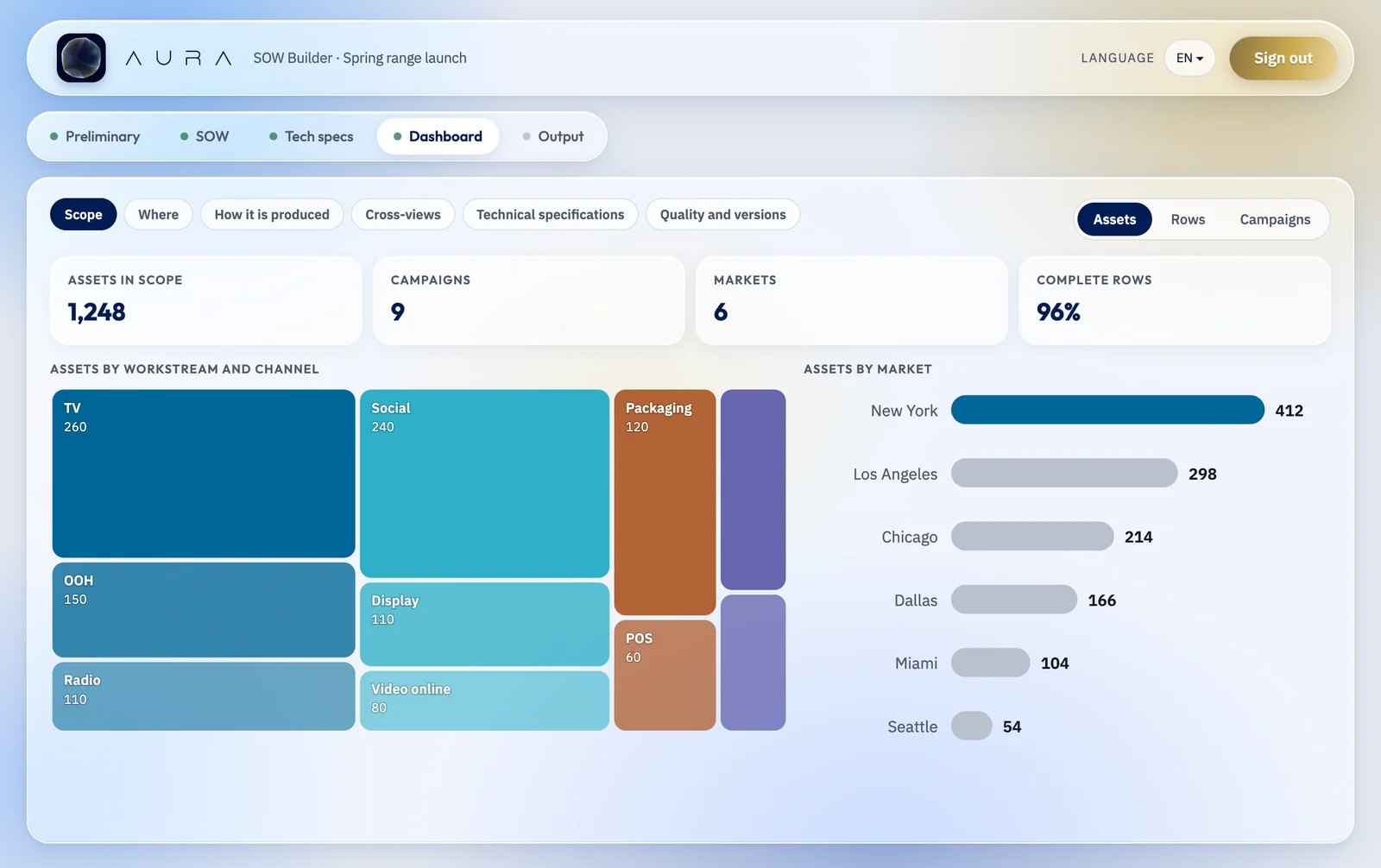
Benchmark
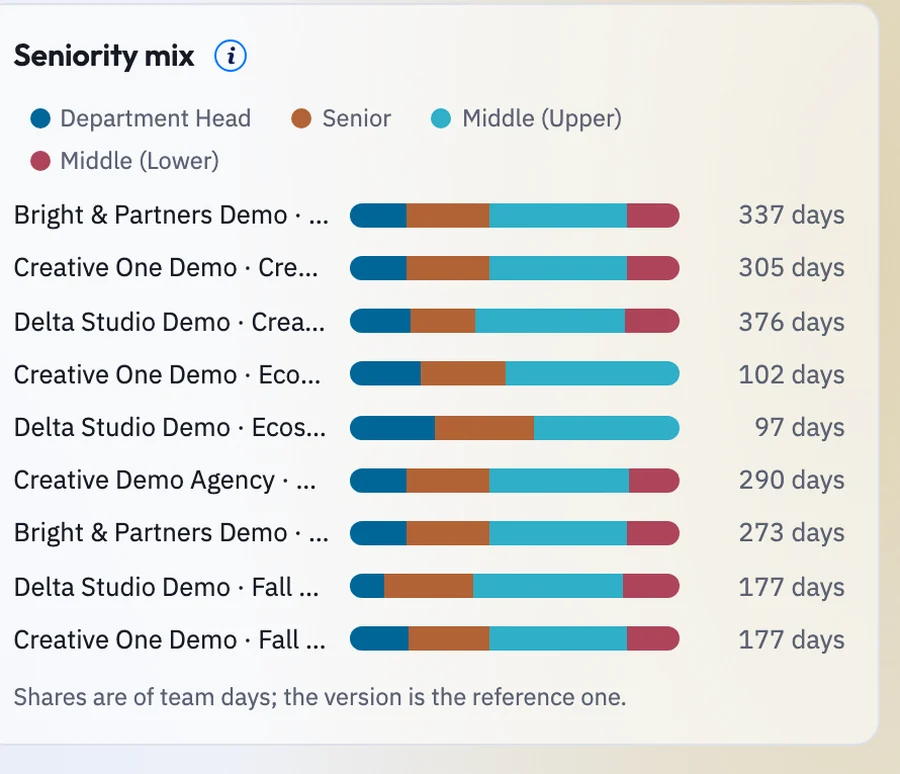
AURA puts rate cards, full-time equivalents and day rates from every agency on the same grid, by role and seniority, and reads them against the reference VA has built from the engagements it has governed since 1994. Each agency quotes in its own currency and its own period; the comparison arrives aligned. That reference is the documented baseline every negotiation starts from, and the figure finance will later be able to validate.
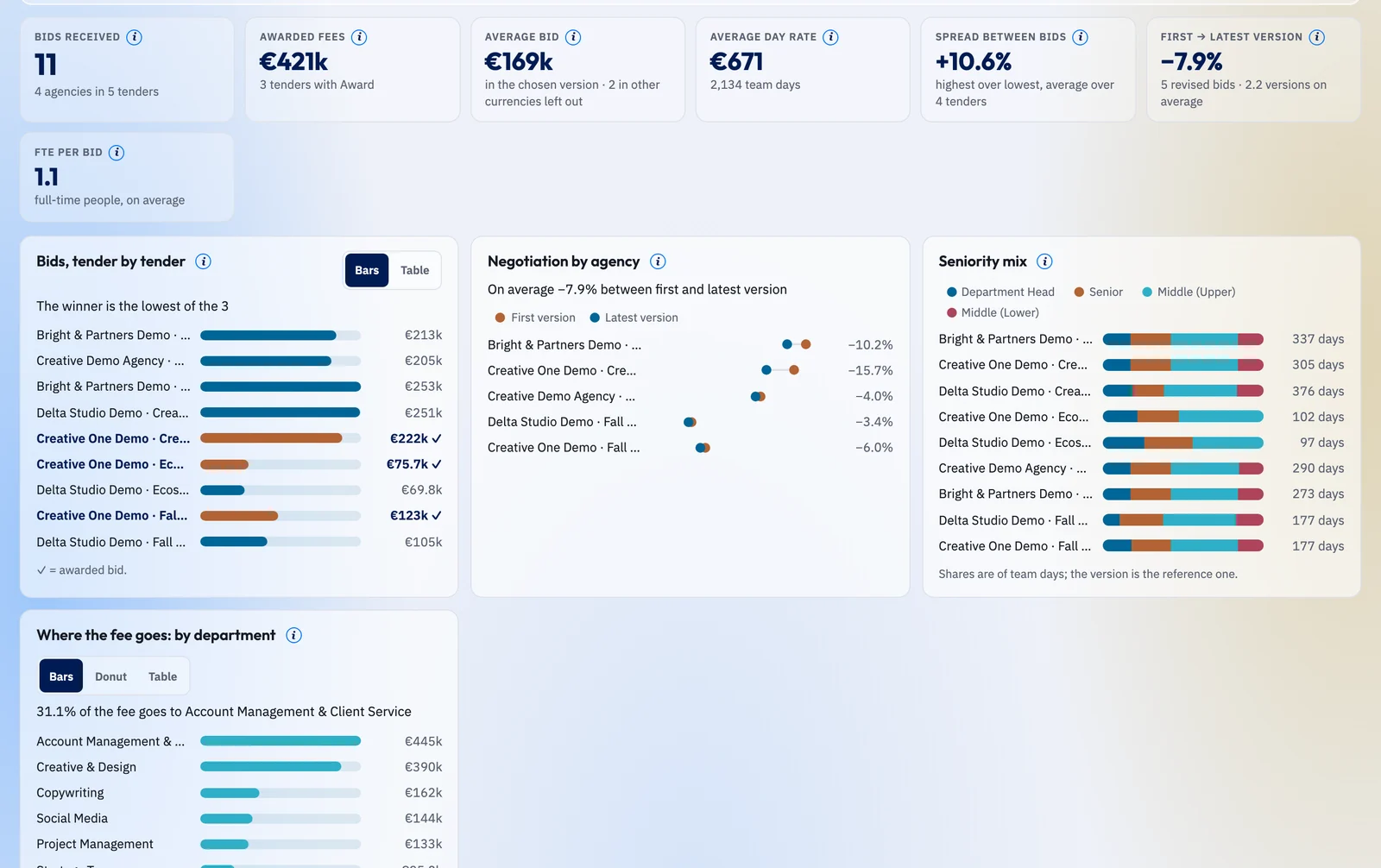
Behind every function
Every rate, scope and score in AURA is read against what VA has governed since 1994: fees, scopes and operating models across every stage, worldwide. A client running one brand in one market reads its figures against the same reference as a portfolio across regions. That is what makes a single agency contract comparable, and a global roster readable.
of marketing spend reviewed
projects reviewed
suppliers assessed and classified
pitches managed every year
Who does what
Where it sits
Close the year with figures everyone reads the same way.
See how the model works today, before changing it.
Choose who works with you, and on what terms.
Questions
No. Each need stands on its own; the stage is the order in which they usually arise. A scope can be written without an assessment, and a benchmark can be read without a scope.
No. The assessment, the scope and the benchmark work for one brand with one agency as they do for a portfolio with a roster across regions. What scales is the number of markets and parties on the record, not the method.
Your team sees both scores, side by side. Each agency sees only its own answers and the output VA shares with it.
It can be. The approved scope is the base for the pitch, for the fee and for the plan tracked in Execution Oversight.
No. AURA holds the data and the scores; VA reads them with you and writes the output.
Get a demo
A walk through Diagnose & Design in AURA with the VA team, on your own case: one brand in one market, or a global portfolio.